Tom says I needed this interview… he’s probably right
What struck me about my conversation with Jill is how much we can emulate people with dementia.
I bet you didn’t see that coming… unless you’ve already watched her amazing interview!
Since talking with Jill—and especially after watching the video a couple of times—I’ve been consciously trying to spend more time being present with whatever I’m doing.
Not halfway present. Not “I heard the words so I must have been listening.”
Actually present.
For example, when my husband comes into my office to tell me something, I now turn away from my computer, put down my phone, and look at his face while he’s talking.
And if I realize my mind wandered? I stop him and ask him to repeat it.
Wow… what a shift from thinking I was listening just because I heard words.
I’m trying to listen with my ears and my heart now.
I’ve also been practicing this in little moments.
Sitting in the backyard (it’s been incredibly hot in Colorado—so this has been glorious, if a little unseasonal for March and early April…) and watching the squirrels, the birds, and even the tiny mouse that lives in our root cellar and sneaks out for birdseed.
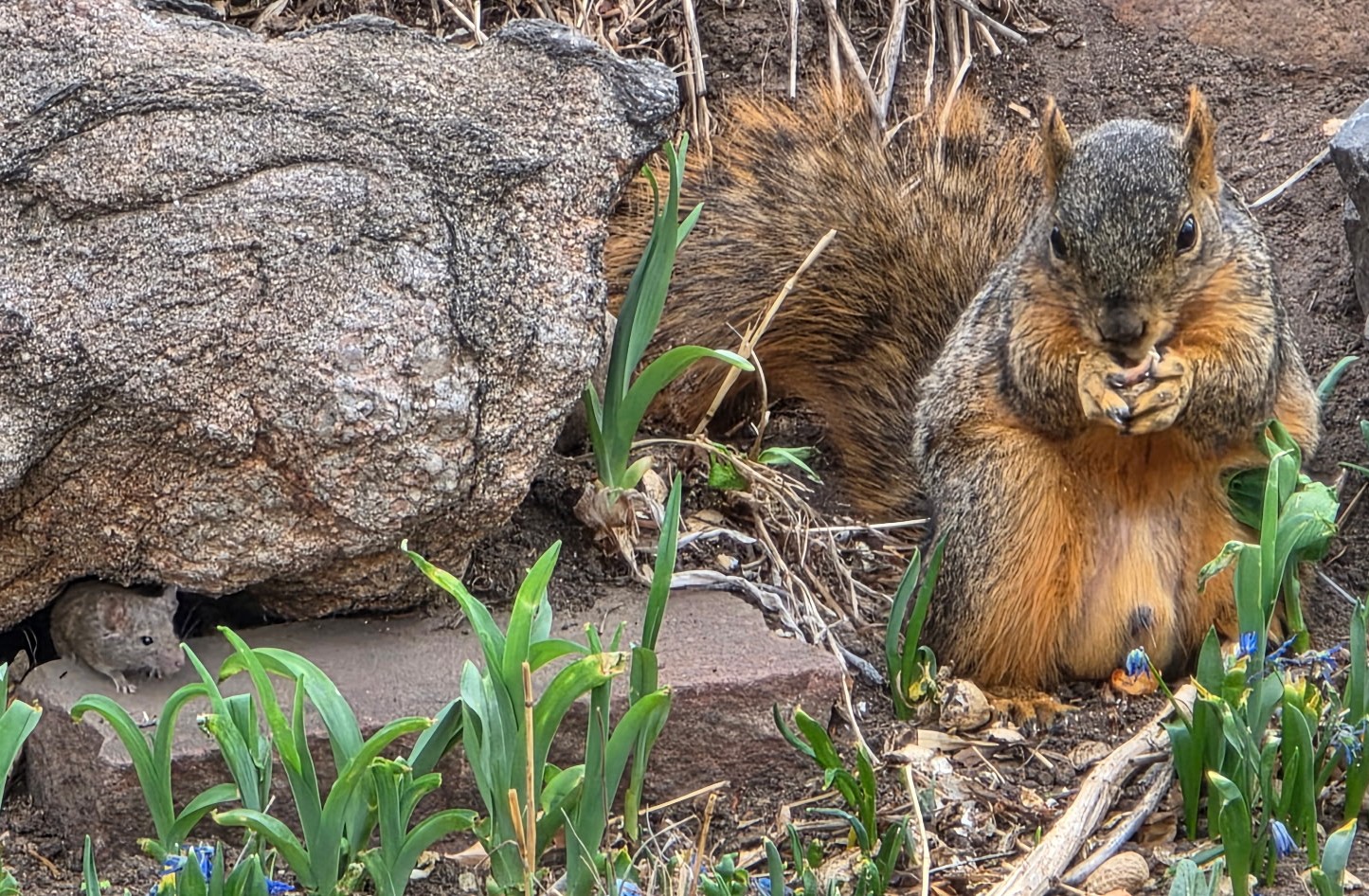
Okay, full disclosure—I usually do this for about three minutes while Tom goes inside to grab something.
But in the past? I would have followed him in, grabbed my phone, and pounded out five emails while he was gone.
Tom and I have also made a nice cold iced tea and sat on the back porch just talking and noticing what’s going on around us. I’m now looking for recipes for caffeine free/sugar free cold drinks to make the act of sitting in the backyard a truly festive occasion!
I even took a walk in a friend’s gated neighborhood and instead of trying to get somewhere—to the bike path, to the exit, to anything—I just noticed every beautiful detail in the yards and on the houses.
Wow… this being-present thing is pretty darn amazing.
What I learned from Jill is that what’s so hard for us—with all of our cognitive skills—is actually very easy for people experiencing dementia.
They’ve lost most of their ability to replay the past and worry about the future…
which basically makes them superheroes of being present.
Now, I don’t have any family members experiencing dementia, so I don’t know firsthand how devastating it can be not to be recognized by someone you love or to watch someone be confused and scared.
But I can imagine it.
And if statistics are right, I will experience it with someone I love at some point.
What’s incredibly hopeful, though, is this:
There are ways to make the experience of dementia safe, loving—even joyful—for everyone involved.
Jill introduced us to the DAWN Method, which helped her support her dad so he could finish his life well—and now guides the work she does with families and caregivers.
And here’s the part that really got me:
The skills that help us relate to someone with dementia are the same skills that make us better in every relationship.
Better parents. Better partners. Better friends. Better leaders.
Slowing down.
Listening.
Letting moments land.
Giving space instead of rushing in.
That last one… whew.
Jill talked about how we help people too much.
We rush them.
We fix things.
We step in before they’ve had a chance to struggle.
But what if we didn’t?
What if we let someone take 45 minutes to get dressed… because it actually matters to them to do it themselves?
How often do we rush a child trying to put on their shoes because we’re in a hurry?
How often do we shield people we love from the very struggles that shaped us?
This hit me in a very real way recently.
Tom was teaching me how to run the cameras and microphones for an interview I’m doing in Tampa (without him there… so yes, I was viscerally rattled).
And he was so slow and patient with me.
He let me do each step. Didn’t rush. Didn’t take over.
By the end, I felt calm. Capable. Confident.
And I thought… wow. I’m not usually that patient. What if I acted more like him?
Because I know exactly how good it feels to receive it.
Also—and I debated whether to share this, but here we are—Tom told me that of all the interviews he’s filmed with me…
this is the one I needed the most.
I chose to take that as loving encouragement.😊
Because honestly, I see it.
I’m learning to slow down to the pace of the person I’m with.
I’m learning to pause.
To let a compliment land.
To give the moment a little white space (okay… not so much in my calendar yet, but it’s a journey).
And I’m learning to notice how often I’m not actually where I think I am…
I’m off in the past or rehearsing something in the future.
So I’m curious—
What’s one small way you might practice being more present this week?
Let me know, I LOVE hearing from you.
With love and gratitude,
Ariel